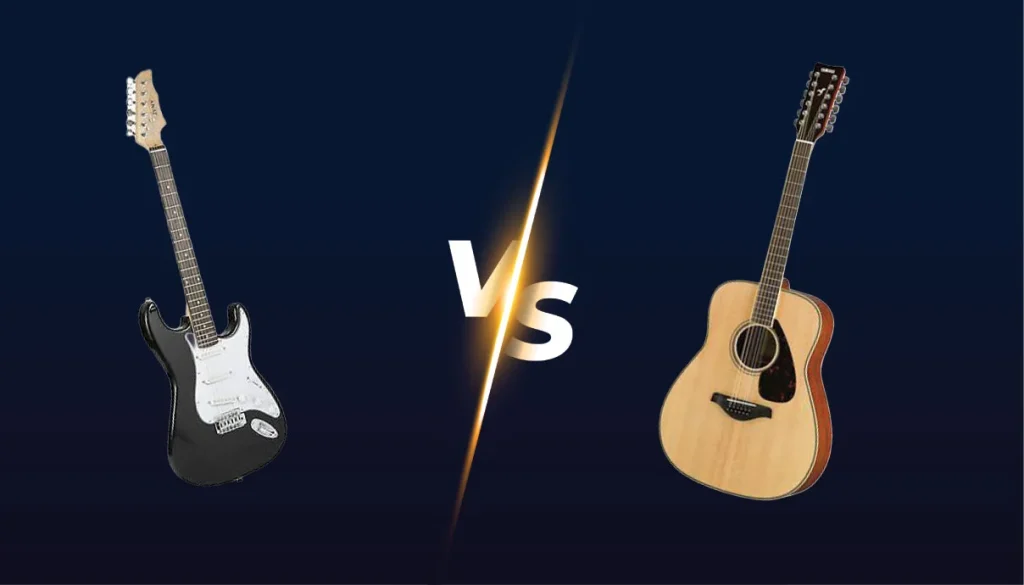
Understanding the difference between acoustic and electric guitar models will help you choose an instrument that matches your musical interests, lifestyle, and long-term goals. Whether you dream of strumming your favorite acoustic songs or playing lead guitar in a rock band, the right choice is the one that keeps you motivated to practice.
In this guide, we’ll compare the acoustic vs electric guitar across seven key differences, explain which option is best for beginners, and help you decide which guitar fits your goals.
Acoustic vs Electric Guitar at a Glance
| Feature | Acoustic Guitar | Electric Guitar |
|---|---|---|
| Sound Production | Hollow body amplifies sound naturally | Pickups send the signal to an amplifier |
| Strings | Steel | Steel (lighter gauge on many beginner models) |
| Volume | Naturally loud | Quiet without an amplifier |
| Equipment Needed | Guitar only | Guitar, amplifier, and cable |
| Best For | Pop, folk, country, singer-songwriters | Rock, blues, metal, jazz, pop |
| Portability | Easy to carry and play anywhere | Requires additional equipment |
| Beginner Experience | Simple setup | More sound options and effects |
Both guitars are excellent choices. The best option depends on the music you want to play and how you plan to practice.
What Is an Acoustic Guitar?
An acoustic guitar produces sound naturally through its hollow wooden body. When you pluck or strum the strings, the body resonates and amplifies the sound without requiring any electronic equipment.
Acoustic guitars are commonly used in:
- Pop
- Folk
- Country
- Indie
- Worship music
- Singer-songwriter performances
One of the biggest advantages of an acoustic guitar is its simplicity. You can pick it up and start playing anytime without needing an amplifier or additional accessories.
Many beginners also enjoy acoustic guitars because they’re portable and ideal for casual practice at home, outdoors, or while traveling.
What Is an Electric Guitar?
An electric guitar works differently. Its pickups capture the vibration of the strings and send the sound to an amplifier. That signal is sent to an amplifier, which produces the sound.
Electric guitars are popular in genres such as:
- Rock
- Blues
- Metal
- Jazz
- Funk
- Alternative
- Modern pop
Because electric guitars rely on amplification, players can experiment with different tones and effects, making them incredibly versatile.
Many beginners are surprised to learn that electric guitars are often easier to press because many models use lighter strings and lower string action.
7 Differences Between Acoustic Guitars and Electric Guitars
1. How They Produce Sound
The most obvious difference is how each guitar creates sound.
An acoustic guitar relies on its hollow body to amplify the vibration of the strings naturally.
An electric guitar depends on pickups and an amplifier. Without an amplifier, the guitar is much quieter, making it ideal for silent practice but less suitable for performing on its own.
If you enjoy playing anywhere without additional equipment, an acoustic guitar offers greater convenience.
2. Playing Feel
Although both guitars usually use steel strings, they don’t feel exactly the same.
Acoustic guitars generally have heavier strings and slightly higher string tension, requiring more finger strength when pressing chords.
Electric guitars often feature lighter strings and lower action, making bends, scales, and fast passages easier to play.
For many beginners, this means the electric guitar feels more forgiving during the first few weeks of learning.
3. Body Design and Comfort
Acoustic guitars have larger hollow bodies designed to project sound naturally.
Electric guitars use solid or semi-hollow bodies, making them thinner and often easier to hold while sitting or standing.
Some players find acoustic guitars more comfortable because they require less equipment, while others prefer the slimmer profile of an electric guitar.
Comfort is highly personal, so trying both instruments before buying is always worthwhile.
4. Tone and Volume
Sound is where these two instruments differ the most.
An acoustic guitar produces a bright, natural tone that’s perfect for solo performances and accompanying vocals.
An electric guitar can produce an almost unlimited variety of sounds depending on the amplifier and effects being used.
If versatility is important, an electric guitar offers far more tonal possibilities.
However, if you love the organic sound of unplugged music, an acoustic guitar remains the classic choice.
5. Equipment You’ll Need
An acoustic guitar is one of the simplest instruments to own.
Besides the guitar itself, you’ll only need essentials like a tuner, picks, and perhaps a capo.
An electric guitar requires additional equipment, including:
- An amplifier
- A guitar cable
- Picks
- Optional pedals and accessories
Although the initial investment is usually higher, many players enjoy the creative possibilities that electric gear provides.
6. Music Styles
Your favorite music should play a major role in your decision.
Choose an acoustic guitar if you enjoy:
- Pop
- Folk
- Country
- Indie
- Acoustic covers
- Campfire songs
Choose an electric guitar if you enjoy:
- Rock
Blues
Metal
Jazz
Punk
Lead guitar solos
Many professional guitarists eventually play both, but your first guitar should match the music that inspires you most.
7. Maintenance and Setup
Acoustic guitars generally require less equipment but still benefit from regular string changes and occasional adjustments.
Electric guitars also need routine maintenance, but you’ll have additional components such as pickups, electronics, switches, and amplifiers to consider.
Neither instrument is difficult to maintain, but an electric guitar usually involves more equipment and setup than an acoustic guitar.
Still Comparing Different Guitar Types?
If you’re also considering a nylon-string instrument, it’s worth exploring the differences between a Classical Guitar vs Acoustic Guitar before making your decision. Understanding how these instruments compare can help you choose the guitar that best matches your musical interests and playing style.
Acoustic or Electric Guitar: Which Guitar Should You Choose?
| If you want to… | Recommended Guitar |
|---|---|
| Play pop songs | Acoustic |
| Play rock or metal | Electric |
| Sing while playing | Acoustic |
| Perform in a band | Electric |
| Practice without extra equipment | Acoustic |
| Experiment with effects | Electric |
| Learn lead guitar | Electric |
| Play anywhere | Acoustic |
No matter which guitar you choose, remember that consistency matters more than the instrument itself. Regular practice and proper guidance will have a much greater impact on your progress than choosing one guitar over another.
Ready to Start Learning?
Once you’ve chosen the guitar that matches your goals, learning with an experienced instructor can help you build proper technique, avoid common mistakes, and stay motivated.
Whether you’re interested in acoustic rhythms or electric solos, our Guitar Lessons in North Vancouver are designed for beginners and experienced players alike. Personalized instruction will help you gain confidence and enjoy steady progress from your very first lesson.
Which Lessons Match Your Goals?
Choosing the right guitar is only part of the journey. Learning with proper guidance can help you build good technique, avoid common mistakes, and stay motivated.
If you’re interested in:
Pop, folk, and chord-based playing, acoustic guitar provide an excellent foundation.
Rock, blues, metal, and lead guitar, electric guitar focus on techniques such as bends, scales, improvisation, and tone control.
Learning as a complete beginner, a qualified instructor can recommend the most suitable instrument based on your goals and musical interests.
Many music educators also follow teaching principles promoted by The Royal Conservatory of Music, helping students develop strong technical skills alongside musical confidence.
The right instructor will help you progress confidently, regardless of which guitar you choose.
Frequently Asked Questions about Acoustic or Electric Guitar
Is an electric guitar easier to play than an acoustic guitar?
For many beginners, yes. Electric guitars often have lighter strings and lower string action, making them easier to press and more comfortable during the first few weeks of learning. However, the best choice depends on the type of music you want to play.
Can I learn electric guitar without learning acoustic first?
Absolutely. There’s no rule that says you must start with an acoustic guitar. If your goal is to play rock, blues, jazz, or metal, beginning with an electric guitar can keep you motivated because you’ll be learning the music you enjoy.
Do I need an amplifier for an electric guitar?
Yes, if you want to hear its full sound. While an electric guitar produces a quiet sound on its own, an amplifier allows you to hear the tone properly and use different sound effects.
Is an acoustic guitar louder than an electric guitar?
Without an amplifier, yes. An acoustic guitar naturally projects sound through its hollow body. An electric guitar is much quieter unless it’s connected to an amplifier.
Can I switch from acoustic to electric guitar later?
Yes. Many guitarists start on one type and later learn the other. The basic skills—such as chords, rhythm, timing, and music theory—transfer well between both instruments.
Should I start with an acoustic guitar before buying an electric guitar?
This is one of the most common questions among beginners. While some players recommend starting with an acoustic guitar to build finger strength, many experienced musicians agree that the best first guitar is the one that motivates you to practice consistently.
Is an electric guitar really easier on your fingers?
Generally, yes. Because many electric guitars use lighter strings and have lower string action, beginners often find them more comfortable. However, developing finger strength is a natural part of learning either instrument.
Can I practice an electric guitar without an amplifier?
Yes. You’ll still hear the strings, although the volume will be much lower. This can be useful for quiet practice, but you’ll eventually want an amplifier to experience the guitar’s full sound and dynamics.
Which guitar is better for songwriting?
Both guitars work well for songwriting.
Many singer-songwriters prefer acoustic guitars because they provide a full, natural sound that’s ideal for writing chords and melodies. Electric guitars, on the other hand, offer greater tonal flexibility and are often chosen for writing riffs and solos.
Final Thoughts
When comparing an acoustic vs electric guitar, there isn’t a universally better choice. Each instrument has its own strengths, and the right one depends on your musical goals, preferred playing style, and the type of music that inspires you.
Choose an acoustic guitar if you want a simple, portable instrument that’s perfect for singing, songwriting, and playing anywhere without additional equipment.
Choose an electric guitar if you’re interested in rock, blues, metal, jazz, or experimenting with a wide range of tones and effects.
Most importantly, don’t spend too much time searching for the “perfect” first guitar. The instrument that matches your interests is the one you’ll be excited to pick up every day—and consistent practice is what leads to real progress.
Whether you choose an acoustic or an electric guitar, the journey is just beginning. With the right instrument, regular practice, and quality instruction, you’ll build the skills and confidence to enjoy playing for years to come.