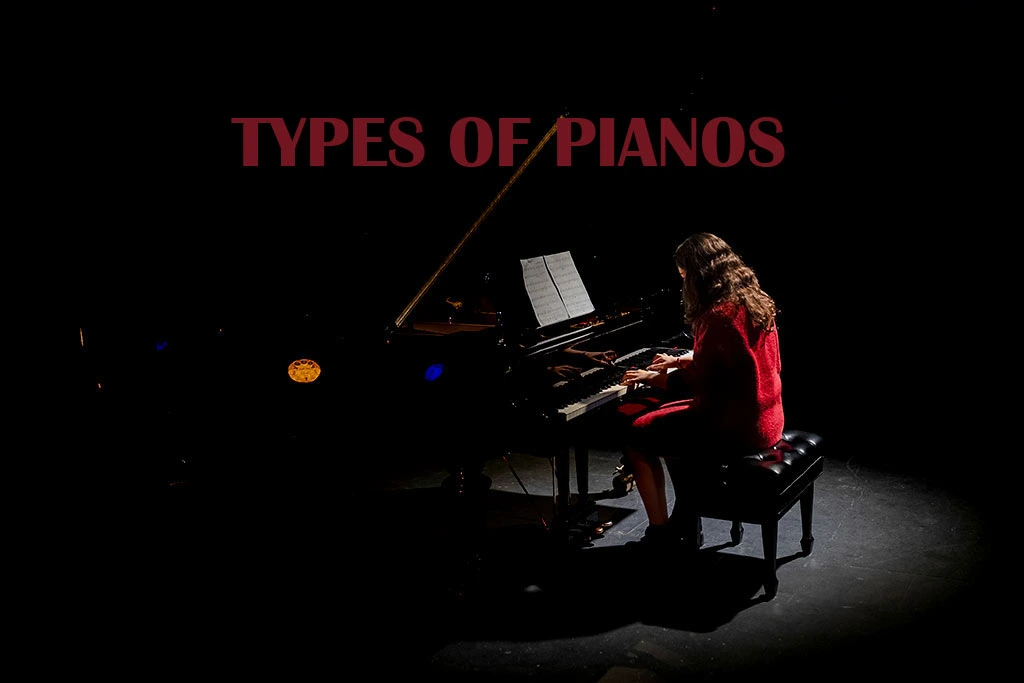
The main types of pianos are acoustic, digital, and hybrid pianos. Acoustic pianos include grand and upright designs. Grand pianos range from baby grands to concert grands, and upright models include console, studio, and spinet pianos. Digital and hybrid pianos use modern technology to offer different playing and practice options.
Choosing a piano can be confusing, especially if you’re a beginner or buying an instrument for your child. You may come across piano types and names such as grand, upright, console, studio, digital, and hybrid without knowing how they differ.
This guide gives you a clear types of pianos list, explains what makes each one different, and shows which options may fit different spaces, learning goals, and playing situations.
What Are the Main Types of Pianos?
There are three useful categories to understand when exploring the type of pianos available today:
- Acoustic pianos produce sound mechanically using hammers, strings, and a soundboard.
- Digital pianos generate piano sound electronically and can offer features such as volume control and headphone practice.
- Hybrid pianos combine elements of acoustic piano design and digital technology.
Within acoustic pianos, the two fundamental configurations are grand and upright. Upright pianos include different cabinet sizes and formats, such as console, studio, and spinet models.
Digital and hybrid instruments can also be built in different forms, including upright-style, grand-style, portable, and performance-oriented designs.
Here is a quick list of piano types names, from the most common acoustic pianos to digital and hybrid models:
- Baby grand piano
- Concert grand piano
- Upright piano
- Console piano
- Studio piano
- Spinet piano
- Portable digital piano
- Console-style digital piano
- Stage piano
- Hybrid piano
Understanding this structure makes the rest of the different types of pianos much easier to understand.
Types of Acoustic Pianos
Acoustic pianos create sound when hammers strike strings, with the soundboard helping project the resulting vibrations. Unlike digital instruments, a traditional acoustic piano does not require electricity to produce its sound.
There are two main acoustic piano designs: grand and upright.
Grand Pianos
A grand piano has a horizontal design, with its strings and soundboard extending away from the keyboard.
Its larger structure allows for longer strings and a larger soundboard, contributing to its distinctive resonance, dynamic range, and playing response. The action of a grand piano also allows very fast repetition of notes.
Grand pianos come in different sizes. From smallest to largest, the common types of grand piano are baby grand, medium (or parlor) grand, semi-concert grand, and concert grand. Exact size names and measurements vary between manufacturers.
Baby Grand Pianos
A baby grand piano is a smaller grand piano designed to provide the horizontal grand-piano format while taking up less space than larger grand models.
Baby grands can work well in homes, teaching environments, and smaller performance spaces where a full concert grand would not be practical.
However, “baby grand” does not mean small in the same way that a compact upright is small. A baby grand still requires significant floor space.
Concert and Larger Grand Pianos
Larger grand pianos are commonly associated with professional performance, concert halls, recording environments, and institutions.
As grand pianos increase in size, longer strings and larger soundboards can contribute to their tonal and dynamic characteristics. Yamaha notes that grand pianos range from baby grand models to concert grands measuring 9 feet or more.
For a home student, however, the largest piano is not automatically the most practical choice. Room size, acoustics, budget, and playing goals all matter.
Upright Pianos
An upright piano, also called a vertical piano, places its strings and soundboard vertically rather than horizontally.
This design gives the instrument a smaller floor footprint than a grand piano, making upright pianos common in homes, schools, studios, and practice spaces.
Upright pianos come in different sizes and formats. From tallest to shortest, the main types of upright pianos are full-size (professional) uprights, studio pianos, console pianos, and spinet pianos.
Console Pianos
A console piano is a relatively compact upright piano designed primarily for home use.
Its smaller cabinet makes it easier to accommodate in a living room, bedroom, or other home environment while retaining the traditional acoustic piano mechanism.
For a family looking for an acoustic piano without the floor space required by a grand, a console can be a practical option.
Studio Pianos
A studio piano is generally taller than a compact console model.
The larger cabinet can accommodate longer strings and a larger soundboard, which can contribute to a fuller sound. Studio uprights are commonly found in teaching studios, schools, and practice environments.
For students who expect to practice regularly, a studio upright can provide a useful balance between acoustic playing experience and space requirements.
Spinet Pianos
A spinet piano is a particularly compact type of upright piano.
Spinets were more common in earlier decades but are relatively uncommon in modern piano manufacturing. Yamaha describes them as small upright models that were popular historically but are rarely produced today.
If you’re looking at a used piano, you may still encounter one. However, its compact size should not automatically make it the preferred choice; the instrument’s condition, action, tuning stability, and overall quality also need to be considered.
Types of Digital Pianos
Digital pianos generate sound electronically rather than by using traditional piano strings and hammers.
Modern digital pianos are available in several forms, from portable instruments to furniture-style home pianos and stage models.
Portable Digital Pianos
Portable digital pianos are designed to be relatively easy to move and set up.
They can be useful for:
- Apartments and smaller homes
- Students with limited space
- Temporary practice spaces
- Musicians who need to transport their instrument
Many digital pianos also provide headphone connectivity, which can make them particularly useful when quiet practice is important.
Console-Style Digital Pianos
Console-style digital pianos are designed to remain in one location and often have a cabinet that resembles an acoustic upright.
They can be a good option for home learners who want a permanent piano setup without the maintenance requirements of a traditional acoustic piano.
Stage Pianos
Stage pianos are designed primarily for live performance.
They generally prioritize portability, performance controls, connectivity, and integration with amplification or a PA system rather than reproducing the appearance of a traditional acoustic piano.
For someone performing with a band, a stage piano may make sense. For a beginner who simply wants to practice at home, many of its performance-oriented features may not be necessary.
What Are Hybrid Pianos?
Hybrid pianos combine elements of acoustic and digital piano technology.
Depending on the design, a hybrid instrument may reproduce aspects of an acoustic piano’s action or playing mechanism while using digital sound technology and features.
This category includes different approaches. Some hybrid instruments focus heavily on replicating acoustic piano action, while others combine acoustic components with digital functions such as volume control or silent practice.
For example, Yamaha offers hybrid instruments as well as SILENT and TransAcoustic systems, which add quiet-practice options to acoustic pianos.
Hybrid pianos can be particularly interesting for players who want a more acoustic-style playing experience while also valuing some of the practical advantages of digital technology.
Acoustic vs Digital vs Hybrid Piano
The three categories differ mainly in how they produce sound and how they fit into a player’s environment.
| Feature | Acoustic Piano | Digital Piano | Hybrid Piano |
| Sound production | Strings and hammers | Electronic sound | Varies by design |
| Traditional acoustic mechanism | Yes | No | Often incorporates acoustic-style components |
| Headphone/silent practice | Not normally available | Common | Available on some models |
| Traditional tuning | Required | Not required | Depends on design |
| Volume control | Limited | Yes | Often available |
| Portability | Low | Depends on model | Usually limited |
| Main advantage | Acoustic playing experience | Flexibility and convenience | Combination of acoustic-style feel and technology |
There is no single best type of piano for everyone; consider your space, musical goals, practice habits, and preferred playing experience when choosing the right type of piano for you.
How Do Different Piano Types Compare?
| Piano Type | Category | Space | Common Use |
| Baby Grand | Acoustic | Large | Home, performance, advanced study |
| Concert Grand | Acoustic | Very large | Concerts and professional performance |
| Upright | Acoustic | Moderate | Home, school, studio |
| Console | Acoustic Upright | Moderate | Home practice |
| Studio | Acoustic Upright | Moderate | Teaching and regular practice |
| Spinet | Acoustic Upright | Smaller | Mostly older/used instruments |
| Portable Digital | Digital | Small | Home practice and portability |
| Console Digital | Digital | Moderate | Home practice |
| Stage Piano | Digital | Moderate | Live performance |
| Hybrid Piano | Hybrid | Varies | Players seeking acoustic-style feel with digital features |
This classification is more useful than simply counting every model as a separate “type.” For example, a console piano is a type of upright piano, while a baby grand is a smaller type of grand piano.
Which Type of Piano Is Right for You?
The right piano depends less on a universal “best” choice and more on what you need from the instrument.
If You’re a Beginner: A beginner can learn on several different piano types.
An appropriate digital piano or a well-maintained acoustic upright can both provide a suitable environment for developing technique, reading music, coordination, and repertoire.
Rather than choosing an instrument because it is marketed specifically as a “beginner piano,” consider whether it allows you to practice comfortably and consistently.
You can also learn more about common learning challenges in 10 Common Beginner Piano Mistakes and How to Fix Them.
If You’re Choosing a Piano for a Child
For children, accessibility and regular practice are especially important.
Consider:
- The child’s interest in piano
- Available space at home
- Practice schedule
- Instrument accessibility
- Whether quiet practice is necessary
- Long-term learning plans
The most expensive piano is not necessarily the most useful choice if the child rarely wants to play it.
Parents can also explore Develop Awesome Music Practice Habits: 6 Points for Parents of Young Learners for practical ways to support consistent practice.
If You Have Limited Space
Space is one of the easiest ways to narrow your options.
A grand piano can have a substantial footprint, while an upright uses vertical space more efficiently. Digital pianos can provide even more flexibility, particularly in portable formats.
If you live in an apartment or have a small practice room, measure the available space before choosing an instrument.
If You Need Quiet Practice
A digital piano is often a practical choice if headphone practice is important.
Some hybrid and specialized acoustic instruments also offer silent or volume-reduction technologies. Yamaha, for example, describes SILENT and TransAcoustic systems that provide additional options for practicing in different environments.
If You Want a Traditional Acoustic Experience
If you value natural acoustic resonance and the mechanical response of strings and hammers, an acoustic piano may be the better fit.
An upright can provide that experience while requiring less floor space than a grand.
A grand piano offers a different action and sound experience, but it also requires more space and is generally more demanding to accommodate in a home.
Does the Piano Type Affect How You Learn?
The instrument matters, but it is only one part of learning piano.
Your progress also depends on:
- Consistent practice
- Proper technique
- Quality instruction
- Musical goals
- Motivation
- A realistic practice routine
For example, understanding scales, chords, harmony, and musical structure can make your playing more meaningful. Our article Theory in Piano Education: Key to Musical Mastery explores why music theory is an important part of piano education.
Your practice habits matter too. Effective Piano Practice Routine for Any Skill Level provides practical guidance for structuring piano practice.
And if motivation becomes difficult, How to Stay Motivated During Piano Practice explores ways to make practice more sustainable.
What Piano Type Is Best for Learning?
There is no single piano type that is best for every student.
A digital piano may be practical if you need headphones, adjustable volume, or a flexible setup.
An upright piano may be a strong option if you want a traditional acoustic instrument without the footprint of a grand.
A grand piano may suit players who have enough space and want the characteristics of a larger acoustic instrument.
A hybrid piano may appeal to players who want to combine aspects of acoustic piano response with digital technology.
The most useful question is not “Which piano is best?” but: Which piano allows me to practice comfortably, consistently, and in a way that supports my musical goals?
Types of Piano Pieces and Compositions
Piano repertoire is also grouped by musical form. Common types of piano pieces include sonatas, etudes (study pieces), preludes, nocturnes, waltzes, fugues, and concertos. Your teacher can help you choose pieces from these forms that match your level and interests.
How MiFa Music & Art School Can Help You Choose
You don’t need to know exactly which piano you should own before beginning lessons.
A teacher can help you understand your current level, musical interests, practice environment, and long-term goals. This can also help you make a more informed decision if you’re considering purchasing an instrument.
If you’re ready to start learning or want structured guidance, Piano Lessons in North Vancouver can help you develop technique, musical understanding, and effective practice habits.
The instrument is important, but learning how to use it effectively is just as important.
Students interested in a structured approach to piano education can also explore The Royal Conservatory of Music, which provides piano syllabi and educational resources for different levels of study.
Frequently Asked Questions About Piano Types
What are the main types of pianos?
The three broad categories are acoustic, digital, and hybrid pianos. Acoustic pianos are primarily divided into grand and upright designs, while digital and hybrid pianos are available in several formats for home practice, portability, and performance.
How many types of pianos are there?
There are three main categories: acoustic, digital, and hybrid. Within these, the most common formats are baby grand, concert grand, upright, console, studio, spinet, portable digital, console-style digital, stage, and hybrid pianos.
What is the difference between a grand and upright piano?
A grand piano has horizontally arranged strings and soundboard, while an upright piano has a vertical arrangement. Grand pianos generally require more floor space, while upright pianos are designed to be more space-efficient.
What is a baby grand piano?
A baby grand is a smaller grand piano. It uses the horizontal grand-piano design but is shorter than larger grand and concert grand models.
What is a console piano?
A console piano is a relatively compact type of upright acoustic piano, commonly designed for home use.
What is a studio piano?
A studio piano is generally a taller upright piano designed for regular practice, teaching, and studio environments.
What is a spinet piano?
A spinet is a small upright piano. These instruments were more common historically and are now relatively uncommon in new piano manufacturing.
What are the types of piano music?
Common types of piano music include classical, jazz, blues, ragtime, pop, rock, gospel, film and soundtrack, and new age or contemporary music.
What type of instrument is a piano?
The piano is a keyboard instrument. Because its sound comes from hammers striking strings, it is also classified as a string instrument and is often described as a percussion-string instrument.
Is a digital piano good for beginners?
Yes. A suitable digital piano can provide an effective environment for learning, particularly when it has an appropriate key action and enough keys for the student’s goals.
Is an acoustic or digital piano better for learning?
Both can support piano learning. Acoustic pianos provide a traditional mechanical playing experience, while digital pianos offer features such as adjustable volume and headphone practice. The better choice depends on the student’s environment and goals.
What is a hybrid piano?
A hybrid piano combines acoustic-style piano technology with digital technology. The exact design varies between instruments, so “hybrid” does not describe one single mechanism.
Can you learn piano on a digital piano?
Yes. A suitable digital piano can support the development of piano technique, music reading, coordination, and repertoire. For students following a structured program, having access to an appropriate 88-key instrument for practice is also commonly recommended.
Common Questions Beginners Ask About Pianos
Should I buy a digital or acoustic piano as a beginner?
Think about your practice environment first. If you need headphones, adjustable volume, or minimal maintenance, digital may be more practical. If you want the traditional sound and mechanical response of an acoustic piano, an upright may be a better fit.
Is a cheap keyboard enough to learn piano?
A basic keyboard can help with some musical fundamentals, but it may not provide the same number of keys or playing response as a full-sized piano. If your goal is to develop piano technique, consider an instrument that provides an appropriate keyboard and playing response rather than choosing solely based on price.
Do I need a grand piano to learn piano properly?
No. Students can develop fundamental piano skills on a suitable upright or digital piano. A grand piano becomes more relevant when its specific action, tonal characteristics, performance environment, or repertoire requirements match the player’s goals.
Is a digital piano good enough for advanced players?
A high-quality digital piano can support advanced practice and performance, but whether it is suitable depends on the player’s specific requirements. Advanced players may have more specific preferences regarding key action, pedals, sound, dynamics, and performance features.
Should I buy a piano before starting lessons?
Not necessarily. If you’re completely new to piano, starting lessons first can help you understand what type of instrument and practice setup will work for you. A teacher can also help you evaluate your options.
What Are the Different Types of Piano Music and Styles?
Piano music can be grouped into different styles and genres, including classical, jazz, blues, pop, and contemporary music. These types of piano music describe the style or repertoire you play rather than the physical type of piano you use. For example, classical music can be played on a grand, upright, digital, or hybrid piano. If you want to explore different musical styles in more detail, read our guide to Piano Genres: From Classical to Jazz
Conclusion: Choosing the Right Type of Piano
Understanding the types of pianos becomes much easier once you separate them into their main categories.
Acoustic pianos include grand and upright designs. Uprights can be further described by formats such as console, studio, and spinet, while grand pianos range from smaller baby grands to large concert grands.
Digital pianos use electronic sound technology and are available in portable, console-style, stage, and other formats. Hybrid pianos combine aspects of acoustic piano design with digital technology, offering another option for players who want characteristics of both approaches.
The right choice depends on your space, musical goals, practice environment, and preferred playing experience. A beginner does not need the biggest or most expensive instrument; the best starting point is one that supports regular, comfortable practice.